Impact

From Struggles To Success – Hellen Kyokaali

My name is Hellen Kyokali.

For years, I battled financial hardship while raising six children as a single mother. My journey started as a KCCA street cleaner, waking up at 3 AM every day to grace the dusty streets of Kampala hustling for my daily bread. Eventually, I transitioned to selling sweet bananas and avocados at Freedom Market, but managing my small capital was a constant struggle.

I sell sweet bananas the big, small, and avocado in freedom market Kalerwe. Before I attended the training, I had few customers at my stall, didn’t care much about either my personal or business outlook. Since IST team trained us, my life and business management skills changed for the better especially the increase in sales and profits. Additionally, my customer care skills and respect improved as IST showed us that customers were a crucial block in our business… I didn’t know how to handle or grow it well. I was part of a savings group, contributing between 1,000 to 2,000 UGX, but I wasn’t actively involved in saving.

When IST stepped in, they taught us the importance of working and coming together and having a single voice as a collective, and the benefits of proper financial management. Now, I have mastered the art of handling my finances, keeping records and no one does it better than me!

I started my business with selling only small sweet bananas and avocado with a stall that I made with my bare hands. But when IST came in, I was trained that it is a good idea to sell more than one product so that I have more than one income streams. I added big sweet bananas.

Being a single mother and the sole provider for a household of six has not been easy. Everyone in my family depends entirely on me.

Before joining the market, I worked as a cleaner for KCCA, waking up as early as 3 AM to sweep the streets. Eventually, I transitioned to market work, where I began a new chapter in my life. Through the training and support from IST, I learned how to manage my finances, which enabled me to save and invest money.

With the savings and determination, I was able to purchase a plot of land, and build my own home in Lugazi. You can’t imagine that a former street cleaner now, after a long day at work has a  a place to return to and rest with my family With this achievement, my mother, family and workmates are proud and I serve as an inspiration to those around me.

When it comes to leadership, they told us, we tend to think every position should be held by men and hold ourselves back. This was my eye opener and believed that it was possible to take up those positions. I actively participated in IST competitions and was selected to hold the position of the women vice chairperson in this market after the IST training. I then later left the vice chairperson role when I vied for leadership as the women councilor LC 3 Makerere 3. I lost because I did not have enough money to win the race but I appreciated the experience. 

But, now we as leaders in the market, we can now talk to these people without fear and solve whatever is bothering us (I think we should mention here what they’re advocating for and also specifically mention their standing up to the leadership dominated by men).

IST helped boost our confidence as women. Our cooperation as women in the market and friendship has improved more than before. Also, I personally had a smart phone which I would use to only take pictures and chatting with my friends. I did not know I can use a phone to get customers online. After that training on phone usage, I use my phone to promote my business. My customers have increased and I make more sales.

My request to IST is to take these trainings to other markets so that other women also get the skills. More so, IST and Korea Hope Foundation should help us in identifying markets for our products especially in outside countries and support us with a machine that makes Avocado oil.

READ MORE
Impact

Hope In Action: Tusubira Women’s Group In Kasubi Market

Namuddu Carol, the group chairperson

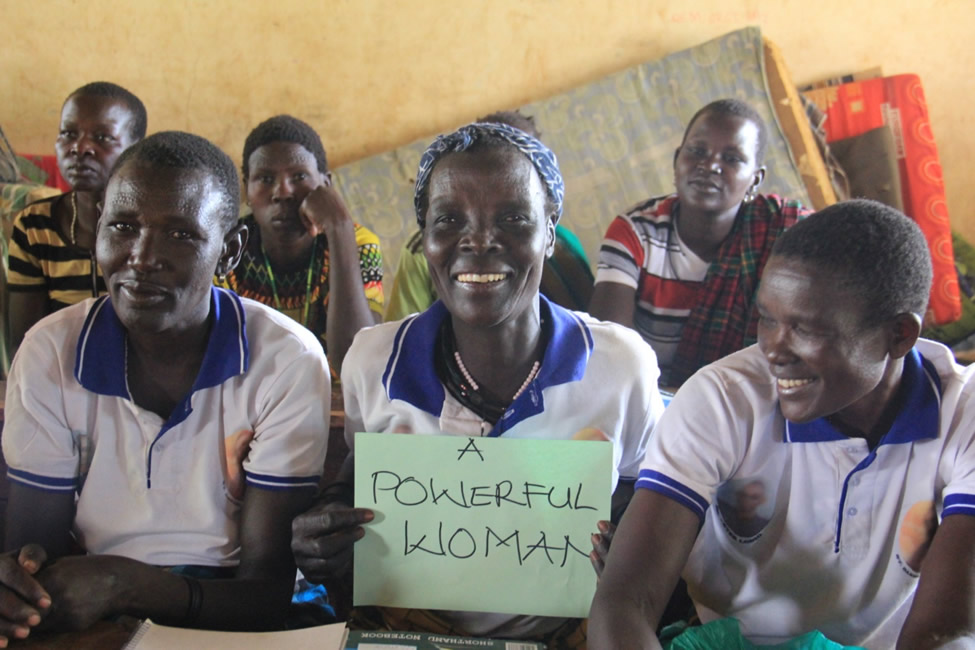
My name is Namuddu Carol, and I have the honour of leading Tusubira Women’s Group, a name that symbolises the hope we carry as women working together like a family in Kasubi Market. In just two months since our formation, we have already made remarkable progress. We are currently finalizing our bylaws as part of our registration process, laying a strong foundation for our future.

Our group has grown to 45 members, each joining by contributing a membership fee of UGX 10,000, and we aspire to reach over 60 members soon. Every Monday at 11 a.m., we come together not only to save but also to contribute a welfare fee of UGX 1,000 per meeting. In this short time, we are proud to have saved approximately UGX 2,000,000 which is a true testament to our commitment and financial discipline as women.

One of the most impactful developments for us has been the adult literacy classes introduced by the Institute for Social Transformation (IST). Many of our members, who previously struggled with basic literacy, can now write numbers, construct simple sentences, and even read signposts. The training didn’t stop at literacy; we also learned essential business management skills.  These included how to improve product quality, maintain sanitation at our stalls, enhance customer care, and most importantly, keeping proper records.

However, as with any new initiative, we face challenges. Some women struggle to attend meetings consistently, as they are not yet fully convinced of the importance of collective action. Additionally, not all members share the same level of commitment, which sometimes leads to misunderstandings and disrespect.

Looking ahead, we have several recommendations for IST and our partners at KHF. We hope for continued adult literacy classes, with additional lessons in English and technology—especially computer and smartphone usage. Beyond saving, we need skilling programs that can empower us to generate additional income, which will not only improve our livelihoods but also boost our group’s financial stability. Moreover, we request more health-focused trainings and medical camps tailored for women and youth in the market.

Our vision is clear: to strengthen our group, expand our lending portfolio, and create opportunities that uplift every member. One of our ideas is to venture into bookmaking, which could serve as both a business and a learning tool for women in Tusubira Women’s Group.

Building a Stronger Foundation – A Secretary’s Perspective

Latifah Nakagwe, Group and Market Secretary

Being part of the early formation of this group has been an eye-opening experience. While we now have more than 38 members, a key challenge I’ve observed is that many women were accustomed to government handouts and expected quick financial support from the group. Adjusting to a savings culture has been a slow but steady process.

Additionally, most of these women bear heavy financial responsibilities with minimal capital. Imagine a woman selling onions with just UGX 1,0000 as capital. How can she consistently save while also paying rent, feeding her children, and covering market dues? This reality makes loan repayments difficult, with some members taking an entire year to pay back UGX 200,000 despite working daily. More empowerment programs are necessary to uplift their financial situations.

Despite these hurdles, there is hope. The training they have received is making a difference, and more women are beginning to see the value of saving. Today, the group has over UGX 3,000,000 in savings—a clear sign that change is happening.

To further strengthen the group, I recommend that IST supports them in drafting their regulations as they prepare for official registration. Additionally, considering that most members are single mothers with growing financial pressures, finding sponsors who can offer half bursaries for their children’s education would be life-changing. Lastly, as we plan for another round of adult literacy classes, we need a thorough needs assessment to place women at the right learning levels, ensuring everyone benefits fully.

Moving Forward with Determination

Tusubira Women’s Group is an inspiration of resilience and ambition in Kasubi Market. With the right support, training, and resources, these women have the potential to transform their lives and communities. Their journey has just begun, and with continued mentorship and empowerment, their dreams of financial independence and sustainable livelihoods will soon become a reality.

READ MORE
Impact

Ending Hunger By Changing Mindsets

My name is Kapel Joel, a 28-year-old from Maaru Sub-County in Kotido District. I am married, and together with my wife we are blessed with two children, expecting our third this year. I am a group member of the Kiteteunag group.

Before attending IST trainings, my life was very different. I was known in the village as a heavy drunkard, and my family life was not good. I left all responsibilities to my wife and never even referred to her as my wife, but simply “that woman.” I spent most of my time with a bad group of friends, and at home, I believed I was the sole decision-maker what I said was final, and no one could challenge me.

I was not involved in farming at all my daily life revolved around spending time with friends, drinking from morning until evening. But I thank WFP and IST for the unbelievable work they have done in my life since July 2024. I can see my life is getting bright. Something I had never imagined.  With the support I received, I was able to access PDM funds, and for the first time, I sat down with my wife to plan what we could achieve together through farming.

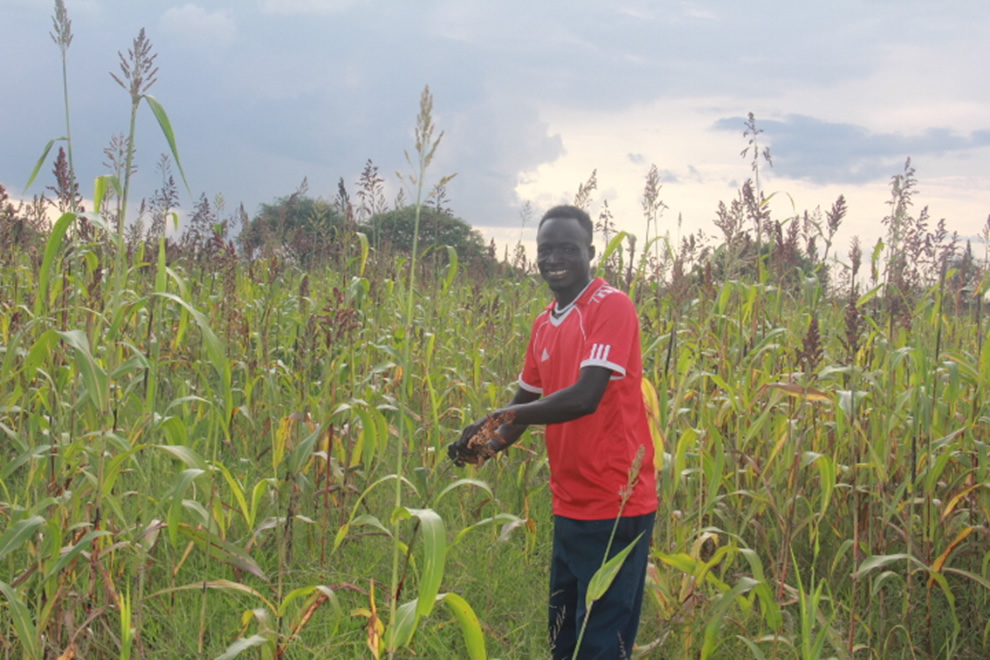
Right now, we together with my wife cultivated 8 acres of sorghum, 1 acre of cassava, an acre of sweet potatoes and 2 acres of millet and half acre of ground nuts. This is what we proudly own as a family. Thanks to WFP and IST, I am now confident that my household will always have enough food, and I will also be able to sell part of the harvest to earn money and take care of my family’s needs.

Because of WFP and IST, I was inspired to open a bank account, and now as a family we save our money there. So far, we have managed to save 350,000 UGX (USD 100), and our plan is to buy an ox-plough to support our farming and increase production, just as we had envisioned in our family vision journey.

Today, my family is a happy family, and many people wonder how we are managing to do it. In Karamoja, it is common for women to be left to do most of the hard work during harvests especially with millet but in my family, things have changed.

Kapel Joel at his farm of Cassava in Maaru Sub-County in Kotido District. Photo Taken by: Shinah Atuhaire, IST Communications Officer on 3rd.09.2025.

As a trained TOT, my dream is to see this same change spread to other families in Maaru. I have already started talking to my fellow men those I used to drink with 6 families showing them that when a man and a woman work together, even the children are happier. They are beginning to believe in me because I am living as an example.

In Karamoja, men are often known for avoiding household and farming responsibilities and that’s how we end up dying of hunger.  I am determined to change that mindset through using GALS Tools.

READ MORE
Impact

Sarah And David Mbabazi – From Farming In Silence To Planning Together

My name is Sarah Mbabazi. I am 48 years old. I live with my husband David Mbabazi aged 56 years. We live in Kimbugu Kakamba Village, Kabwoya Sub-County, Kikuube District. We are blessed with seven children and three grandchildren.

I am a member of Kichanga Twimuke Farmers group supported by WFP under the AMS programme. Early in 2024, before the GALS couple training by the Institute for Social Transformation (IST) in partnership with the World Food Programme (WFP), David and I farmed but never as a team. He often worked far from home, while I cultivated alone. We both earned money but made decisions separately, with no shared plans for our family’s future.

From 3rd-5th December, 2024 my husband and I participated in the IST organized GALS training during which we learned the value of joint planning and shared vision. I remember vividly the session where I compared myself to a bird in a cage trapped by fear and silence. It moved me deeply. When we returned home, I approached David, and for the first time, we had an honest conversation about our dreams. We discovered we both wanted to build a home yet we had never said it out loud.

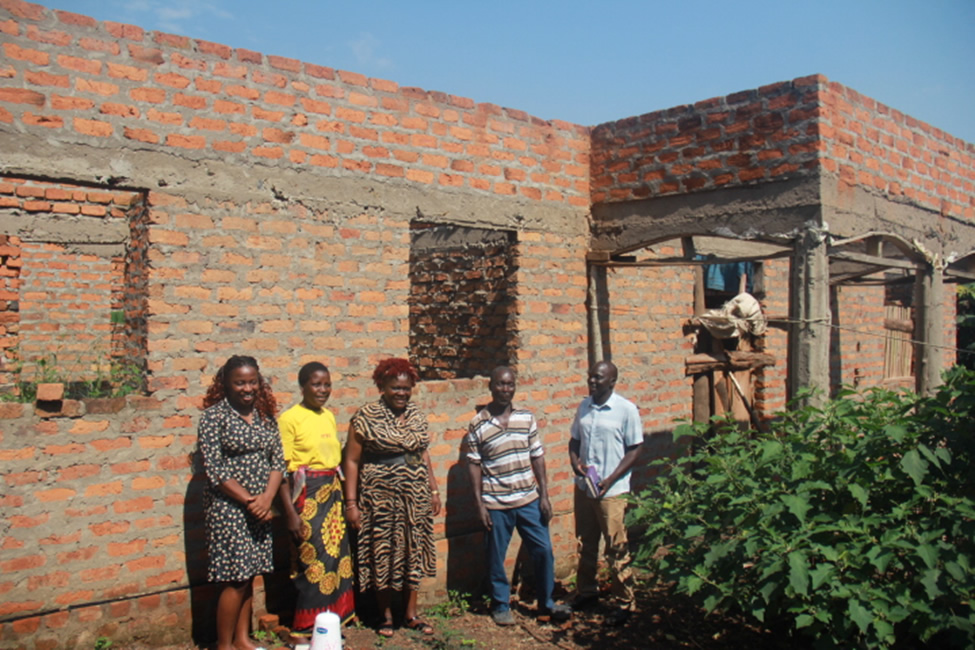
With guidance from IST, we began making that dream a reality. Today, our family house is under construction, built on joint effort, open communication, and mutual respect.

David and Sarah Mbabazi together with IST team at their new dream house under construction in Kimbugu Kakamba Village, Kabwoya Sub County, Kikuube District.
Photo taken: 30th. 08. 2025 by Shinah Atuhaire, IST Communications Officer.

Our relationship has changed completely. We now farm together, plan together, and grow our small poultry and piggery business as a team. The income has helped us care better for our children and grandchildren, and we now feel financially stable and confident about the future.

“We were once distant in vision, but now we walk one road together with shared dreams and shared steps.” –Sarah & David

We are deeply grateful to IST and WFP for helping us rediscover ourselves not just as individuals, but as partners. Our story is proof that when couples plan together, they grow together. We hope others can learn from our experience and embrace the power of GALS to build stronger, more united and economically empowered families and communities.

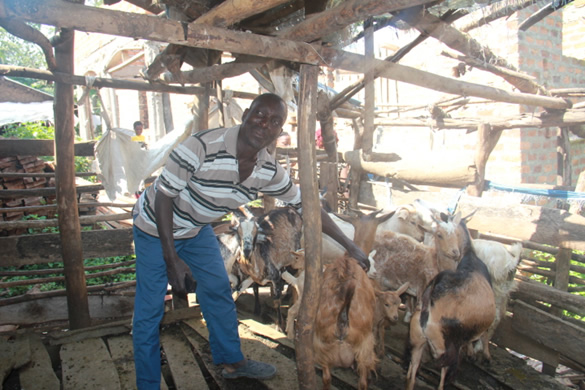
David Mbabazi showing off the family goats he bought together with his wife.
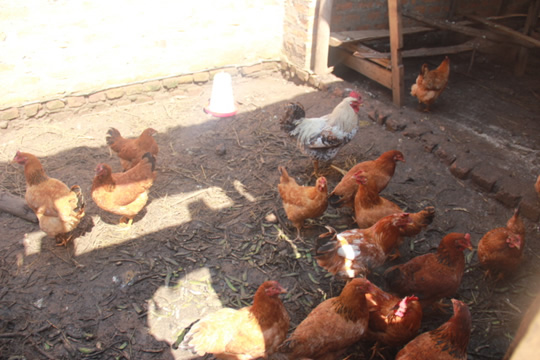
The family hens David and Sarah purchased together after IST and WFP training in January 2025. Photo taken: 30th.08.2025 by Shinah Atuhaire
READ MORE
Impact

Mapping My Way Out: How Gals Saved My Life

My name is Adia Jonathan Valex, a 27-year-old father of two, living in Maaru Sub-County, Kotido District. I’m a proud member of Tokerete Saving Group supported by WFP and SASAKAWA under the AMS programme.

There was a time in my life when I felt completely lost. I was struggling with alcohol, and it consumed every part of me; my ability to think clearly, plan for my family, and even believe in myself. Hopelessness settled deep inside me. I had no direction, no vision, and no confidence. I reached a point where I almost took my own life.

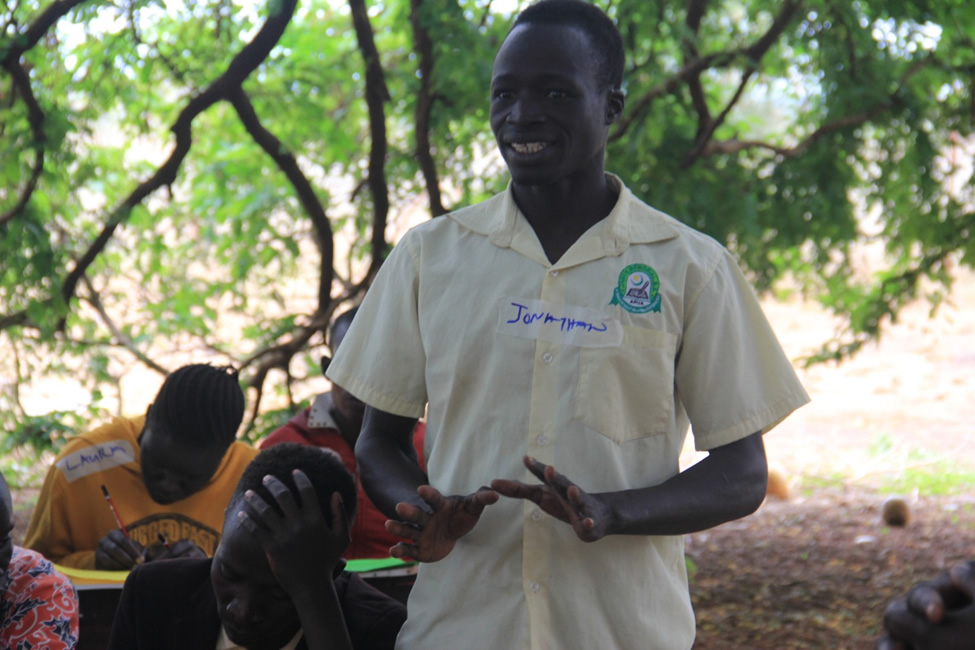
In June, 2024 Institute for Social Transformation in partnership with the World Food Programme WFP introduced our group to the GALS (Gender Action Learning System). Through the GALS tools like the “Bird in a Cage”, I was able to identify the negative behaviors and social norms that had trapped me like the cage I had unknowingly built around myself. The “Vision Road Journey” tool helped me draw a clear path forward. I mapped my dreams, broke them into achievable steps, and began acting. With GALS, everything in my life changed.  IST didn’t just bring training they brought hope. They helped me rediscover my purpose and see that my life still held value.

“I now know that my life has meaning. I’m no longer trapped, I have direction, I have a voice, and I have a future. That is what the power of GALS has given me.” – Jonathan

Today, I stand with renewed confidence and a deep sense of purpose. I now have a vision to buy land near the trading center where I will grow sorghum and millet, not just to feed my family, but to earn a steady income. Before, I couldn’t even afford school fees. But now, my children go to school, and every day I watch them grow, learn, and dream. That alone fills my heart with pride. But I didn’t stop there.

I felt a responsibility to share what I had learned. I have started reaching out to both youth and elders in Maaru, including three community groups that IST has not directly trained. Together, we are planting seeds of hope and opening our eyes to what’s possible.

This journey has taught me that development isn’t just about being trained it’s about being empowered. It’s about having the tools, vision, and encouragement to transform your own life and to help others do the same.

I believe this project should reach even more people. Because if I could change, anyone can.

I am living proof that transformation is possible. And my message to anyone struggling like I once did is simple: change begins when you start believing in yourself.


READ MORE
Impact

From Individualism To Collaboration And Increased Production

My name is Kiyonga Betty. I live in Maaru Sub-County, Kotido District, and I’ve been married to Achuka Abraham, aged 23, for three years. Together, we have one son. I’m a farmer I grow sorghum, green grams, groundnuts, sim sim, cowpeas, and watermelon for both sale and home consumption.

When I got married, I never imagined that I could have a say in household decisions. My husband made all the plans. I was not allowed to speak about money or express my views. And even when I was beaten, I stayed silent. I told no one. That was my life for years silent, fearful, and isolated.

Things began to shift when I attended a training organized by the Institute for Social Transformation (IST) in partnership with the World Food Programme (WFP). We were taught that women have the power of voice to speak up, influence decisions, and negotiate within the household. That message touched me deeply. For the first time, I felt seen.

“Before, I was silent. Now, I am a partner. I have a voice in our home and on our land. We plan together. We plant together. And I believe we are building a better future not just for ourselves, but for our son too.” Betty

Soon after that training, I received a transport refund of 120,000shs (USD 34.28) for attending the four-day sessions. My husband demanded I hand it over, saying only he plans for money. I refused and he beat me. The stress and pain were too much. I fell ill and sought refuge at my parents’ home in Rutoum village.

While there, I finally opened up about what I had been going through. For the first time, I broke the silence. We were guided through counseling, and eventually my husband came to join me so we could go through the counselling together.

I found my voice and I decided not to lose it again.After the second training, I reached out to Joel, one of the GALS-trained facilitators (TOT). He agreed to speak with my husband, and in February, they had that conversation. Just a few weeks later, I began to see change.

My husband started helping with housework. He began coming to the garden. Where I used to plant one acre of sorghum alone, this season we’ve planted five acres together.

Later, when he received UGX 1 million from the Parish Development Model (PDM) fund, he shared it with me. I proposed that we use part of the money to buy an ox-plough to improve our farming. He agreed. He even added his own idea to hire laborers to help me with weeding, since he’s currently in school preparing for Senior Four and can’t always be in the garden. This change may sound small, but for me, it is everything.

READ MORE
Impact

Breaking Barriers: Martina’s Rise At 58

Before joining the WFP and IST trainings, my family life was filled with violence and unrest. We were known in our community for drunkenness. My husband would often sell our family cows and spend all the money at local breweries. When he returned home, he would demand food, leaving nothing to support the household. Every time I told him there was no food, it would lead to fights. Our family was falling apart, and there was no understanding or peace in our home.

When we attended the couples’ training, we both learned about the struggles women face, and my husband began to realize that his actions were wrong. After returning home, I finally found the courage to share with him what I had held in my heart for more than five years. I opened up completely, and to my relief, he listened. Today, whenever he sells a cow, he informs me first, and we discuss together how to use the money as a couple. Our decisions are now shared, and we work together as partners.

As a family, we began holding joint family planning meetings with our children, ensuring that everyone’s voice was heard and decisions were made together. The second training I attended was a leadership training for women. At 58 years old, I had never believed that women could be leaders. I never imagined that I could have a voice or the confidence to take on a leadership role, thinking that leadership was only for men.

After the training, everything changed. I gained the courage to contest for the position of Parish Councilor of Kokoria, running against five men under the NRM flag. I won the election, and I credit WFP and IST for giving me the confidence to believe in myself and step into leadership.

Nakidon Martina actively engaging in a drawing exercise during a women’s leadership training.

I am requesting the offices of IST and WFP to continue supporting women like me, helping them overcome shyness and believe in their potential. I never imagined that at the age of 58, I could step into a leadership role but with their guidance, I realized that women too can lead and make a difference.

READ MORE
Alumni

Hellen Cinderella Nawatenea graduate of TfT 2008

Story Of Transformation

My name is Hellen Cinderella Nawatene, a graduate of TfT 2008. I currently work with a Savings and Credit Organisation SACCO as an Assistant Treasurer, and I am also a passionate Baker. My journey before TfT can only be described as one with uncertainity, living la vi da loc after University and getting employed in a financial Institution. I had not purposed myself to become a confident, committed and competent person in many areas of my life.

I learnt about Training for Transformation Programme from one of the Alumni who helped introduce me to it, after getting to know her work and how the programme has helped to shape her as a person, and the whole organization where she worked I was ready to be enrolled for the course.

Leaders who do not act dialogically, but insist on imposing their decisions, do not organize the people–they manipulate them. They do not liberate, nor are they liberated: they oppress.― Paulo Freire, Pedagogy of the Oppressed

Opportunity

I was lucky to have been chosen to join the course in Kleimmond South Africa, which to this day I cherish and praise to all and sundry that it was a better study experience as compared to my University days. I learnt personal skills in problem solving, listening and conflict management which I still apply in my day to day life and work. The team work, organization development and how to work with different groups of people in a wider society especially on how to engage on cultural, political and social aspects are a gem that I carried away from TfT to my home Country Uganda.

Impact

This programme has impacted my organization positively by helping us teach the members in a participatory way so that everyone is involved and owns the decisions made by the organization, do role plays for everyone to understand and relate with the idea or issue at hand. Our Organisation adopted to meditation and self reflection of members before we start our meetings, something that helps kick start and call everyone to attention and feel at ease. By continuously applying the principles of Action Reflection and Action, Critical thinking, Problem Solving and participatory methods in areas where I work, see the SACCO growing to the largest saving group in the country which will eventually become a Bank ,bring more members of the community to join the Organisation, members applying for bigger loans to better their lives especially the women thus reducing Domestic violence in homes.

READ MORE
Projects

Water, Hygiene & Sanitation

IST is constructing a solar powered water project in Lacor market in Gulu aimed at improving access to safe water, promoting safety and hygiene for reduced incidences of diseases and health risks among market communities. The project will benefit 600 families in and around the market.

Many open markets in Uganda, which are the main workplaces for women in the informal sector, women decry of poor Sanitation and hygiene conditions and the need for access to safe water in these market communities. The sudden outbreak of the global pandemic COVID-19 has aggravated the situation extensively being revealed even by media coverage that majority of markets in Uganda are operating under very poor sanitation and hygiene conditions with poor facilities.

This also justifies the reason why there has been several attempts to close many markets that do not meet the standards.  Safe water, sanitation, and hygiene services are very critical in this emergency period as the world is battling with curbing down the deadly Corona Virus disease. Emphasis on ensuring accessibility to safe water, positive behavioral practices like regular hand washing are such an essential part of preventing and protecting human health to avoid possibility of incidences of disease infections and spread. IST has only been able to reach out to only one market and the need for more facilities in other markets remains unmet and calls for immediate intervention and reach.

The Lacor Market Water and Sanitation project is being implemented with support from Korea Hope Foundation and Reginald Seawright III.


READ MORE
Projects

Market Women’s League

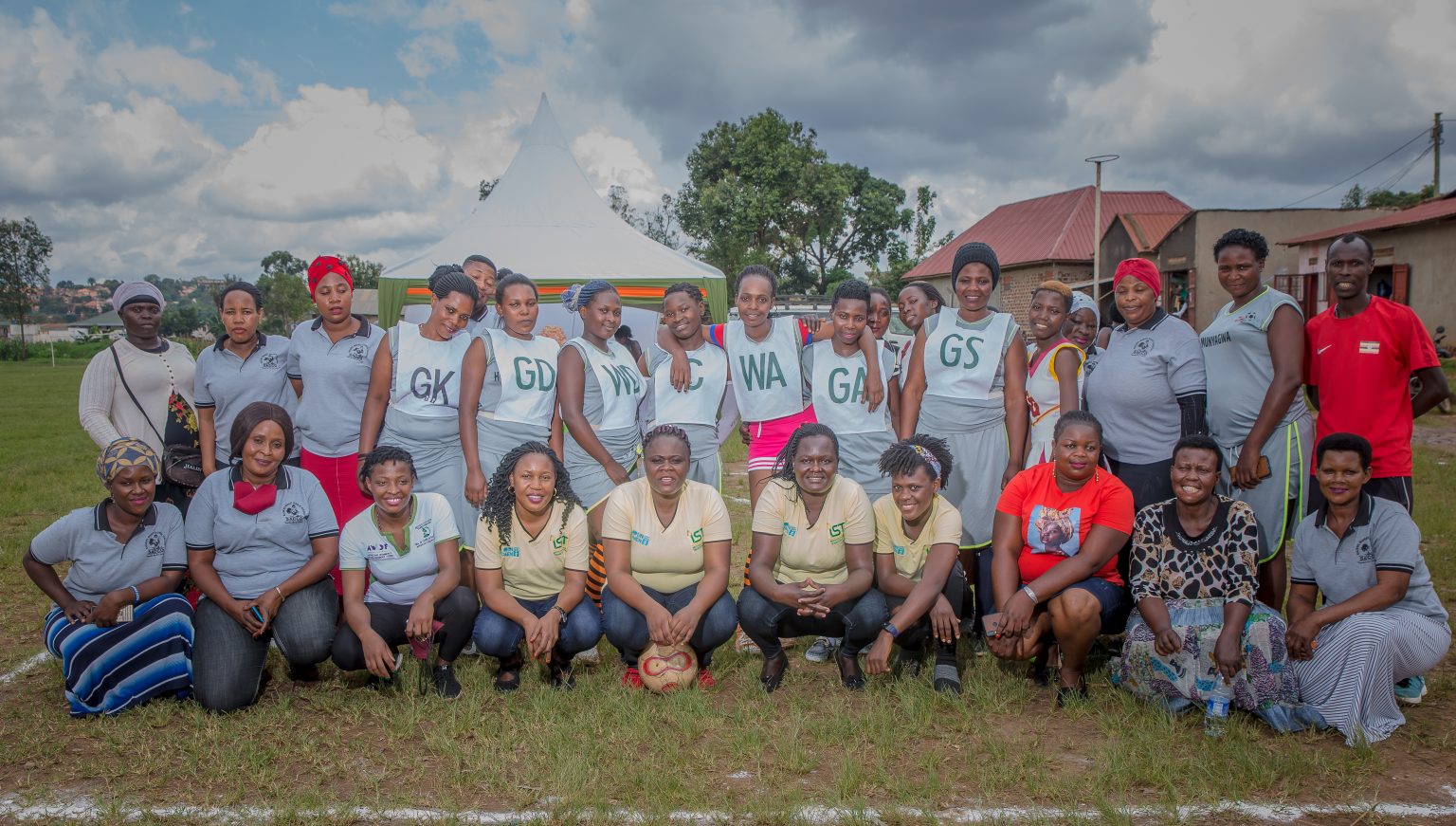
In the bustling environments where market women and youth operate, the challenges they face are manifold. Long working hours, unstable incomes, and limited opportunities for recreation and social networking create a high-stress atmosphere that can lead to physical fatigue, mental stress, and social isolation. These factors not only diminish their productivity but also adversely affect their overall well-being.

Market Women’s Netball League for wellness and networking; IST conducts market community activation sports activities across the country where market vendors and other community members enjoy entertainment and at the same time receive information on prevention of gender-based violence. We intend to use sports to promote market women’s activism, connectivity and networking.

The sports activities enlighten the communities on their legal rights, sexual harassment, gender-based violence and unites them to campaign against gender-based violence and report cases having known their rights.

READ MORE